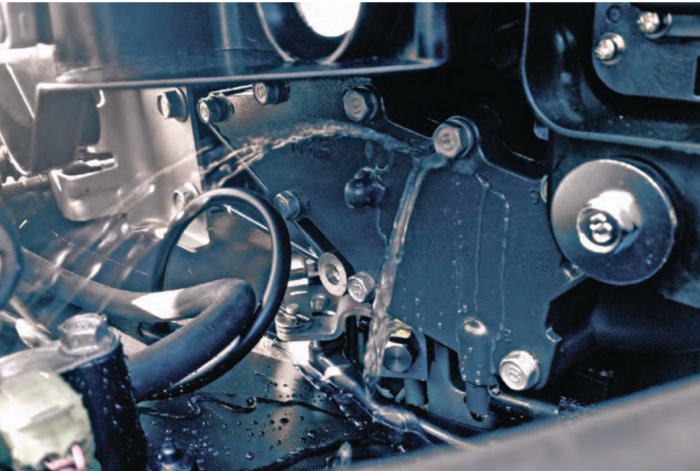
Although winter may not be on the minds of everyone quite yet, it is time to start preparing for winterizing! Some of you will be winterizing your stern drive, and inboard powered boats to prevent freezing of water that doesn’t self drain from the blocks and exhaust manifolds. The rest working on the outboard motors, that while they are self draining, there are areas of the cooling system that you need to be mindful to ensure all of the water is drained from the system.
In addition to water flowing through the block and heads, cooling water in modern outboards issent to cooling passages in the VST, fuel rails, rectifier/regulators, and additional oil-cooling passages on the block. Usually, the cooling water is routed through small diameter hoses between components.
After running a motor for the last time of the season, and before freezing weather arrives, it is very important to allow enough time for all the water to drain out of all passages. This is particularly important if a boat has been operated in conditions where mud and sand may have entered the cooling system. The mud and sand can collect in hoses and passages, restricting the flow of water as the system is draining. If you suspect that ingested mud or sand is restricting water passages, it will be necessary to use compress air to remove the restrictions.
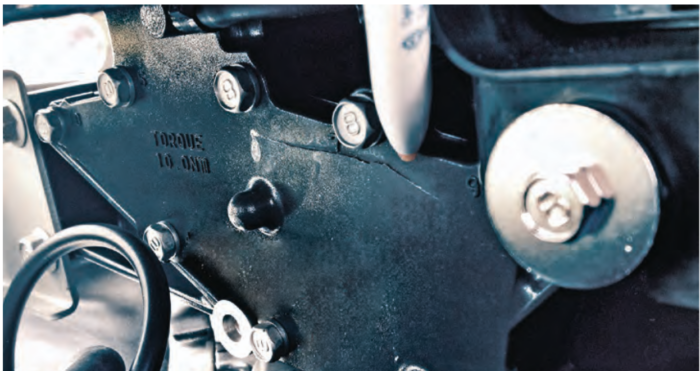
To drain the cooling system completely, the motor must be left in a vertical position long enough to allow all water to drain. This is particularly important on models where sections of the cooling system may be lower than the water passages in the block and midsection when the motor is tilted up, for example: 2.8L and 4.2L models. Tilting up a motor before it is completely drained may allow water to remain in the exhaust passage in the lower unit where it can freeze, cracking the lower unit housing.
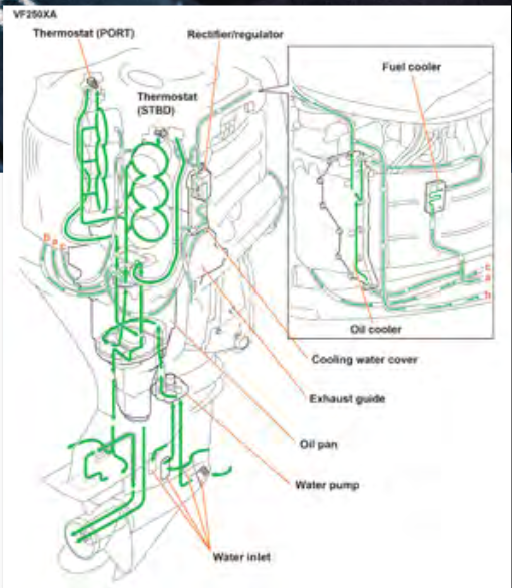
Keeping these cooling system tips in mind while performing winterizations, and sharing them with your friends, will help ensure a great start to the next boating season.