Cooling system flushing is essential to prevent system corrosion and clogging from salt, sand, or
other debris. We recommend flushing the cooling system with fresh water after each use as soon
as possible.
The procedure for flushing the engine in a watercraft is different than most marine engines and must
be followed to prevent internal water damage to the motor.
The procedure is as follows:
1. Connect the water hose to the flush attachment. Do not turn on the water at this time.
2. Start the motor first, then immediately turn on the water supply.
Notice: Never turn on the water supply before starting the engine. The water can back flow through
the exhaust and into the cylinder. If the engine is rotated with the starter, it can cause severe engine
damage. Be sure to turn on the water supply immediately after starting the engine to prevent
overheating.
3. Allow the motor to run at a fast idle for 5 to 10 minutes to adequately flush the engine.
Do not run the engine over 4,000 rpm on land. Also, do not run the engine for more than 15 seconds
without supplying water, otherwise the engine could overheat.
4. When flushing is completed, return the engine to idle, shut off the water supply, and force the remaining
water from the exhaust system. Rev the engine slowly, opening and closing the throttle for 10-15 seconds.
It is okay to run the engine without water for a maximum of 15 seconds (do not use full throttle).
5. After flushing is complete, remove the water supply hose and install the cap.
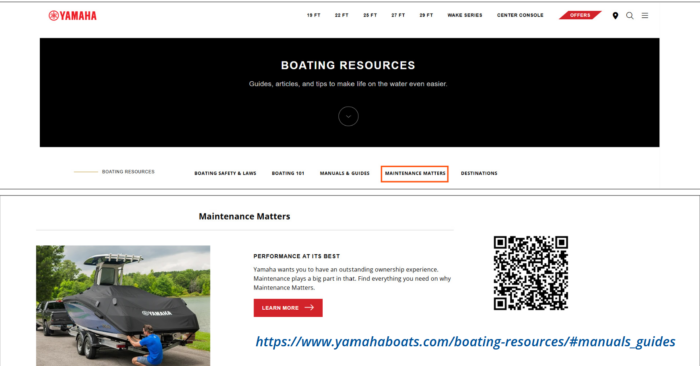
For more maintenance tips, be sure to visit the Maintenance Matters® section found under Boating Resources
on the Yamaha Boats website, or by scanning the QR Code, or by just clicking the link below.
https://www.yamahaboats.com/boating-resources/#manuals_guides