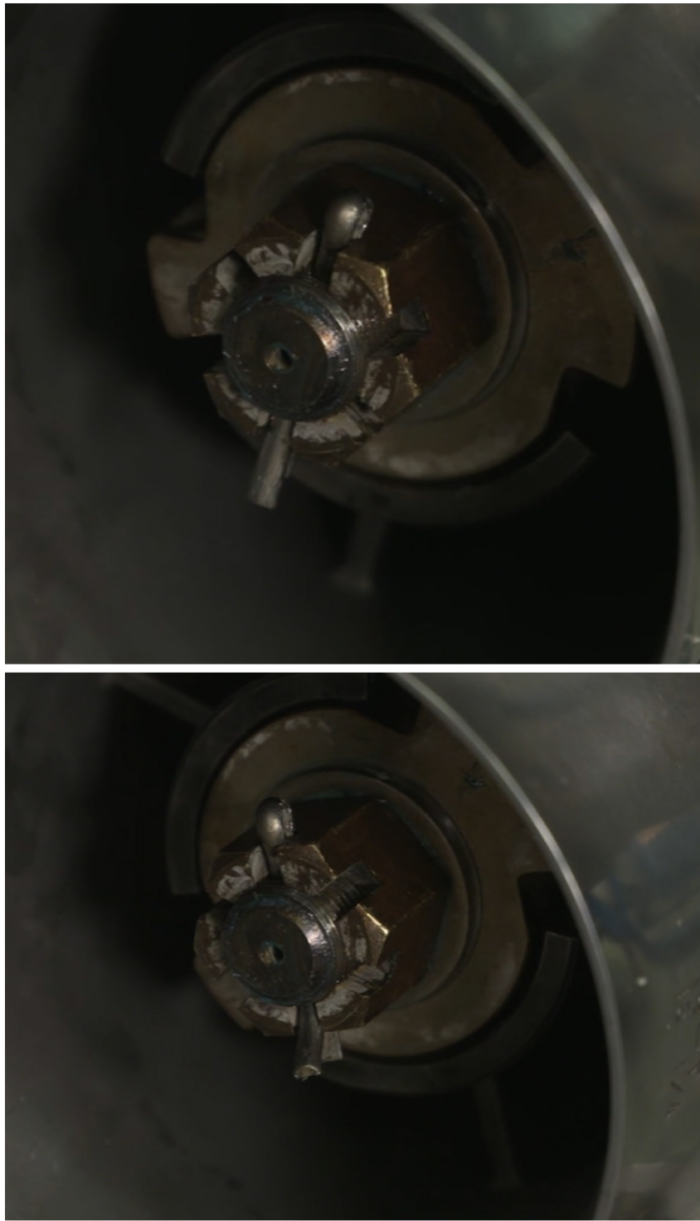
As a part of regular maintenance, propellers should be removed and inspected on a consistent basis. This will not only prevent the propeller from seizing on the prop shaft, but it will also allow you to remove any present fishing line to keep the prop functioning at full capacity.
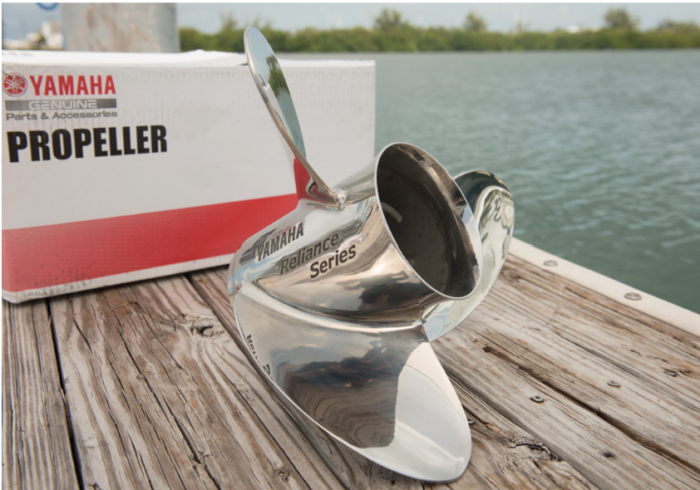
You could be seriously injured if the engine accidentally starts when you are near the propeller. Before inspecting, removing, or installing a propeller, place the shift control in neutral, turn the main switch to the “off” position, remove the key, and remove the clip from the engine shut-off switch. Turn off the battery cut-off switch if your boat has one.
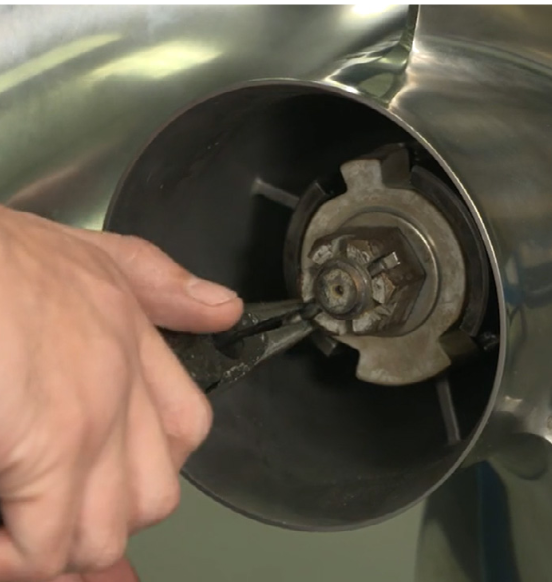
To remove the propeller for a closer inspection, you will first need to remove the cotter pin with a pair of needle nose pliers.
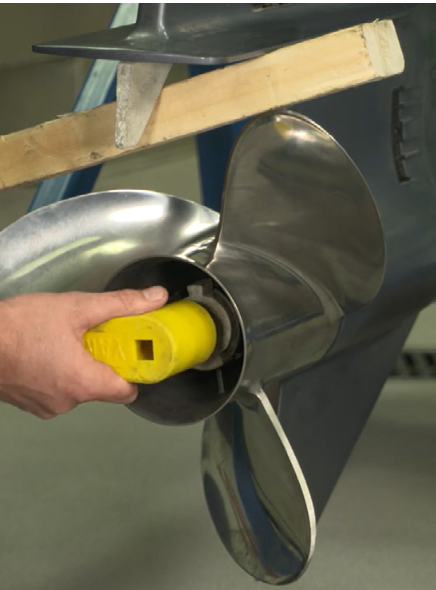
Do not use your hand to hold the propeller when loosening or tightening the propeller nut. Place a wood block between the ventilation plate and the propeller to prevent the propeller from turning and remove the nut by using the appropriate size socket.
NOTE: If the propeller has seized onto the prop shaft and will not come off, use a soft hammer, mallet, or a prop puller to help remove it.
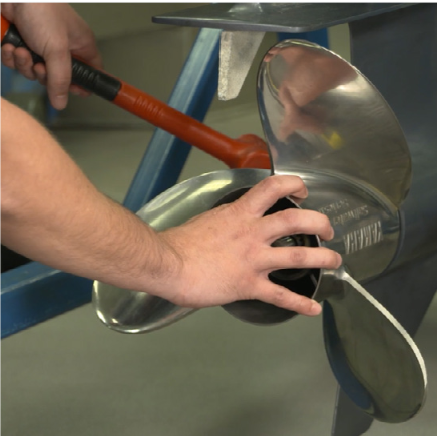
NOTE: The thrust washer may be stuck in the prop.
Pull off the forward thrust washer and check for debris that may be wrapped around the washer or prop shaft.
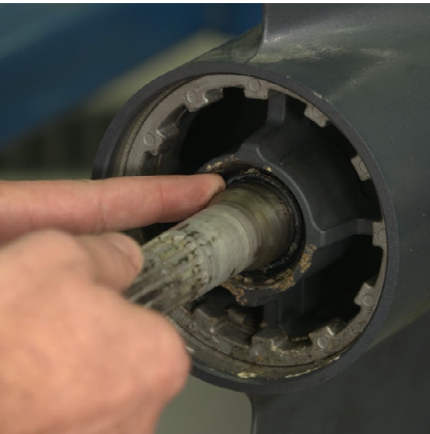
If the propeller uses a pressed-in rubber hub, look for signs of overheating or hub spinning. For universal hubs, look out for cracks or splits in the hub. Also, inspect the blades for damage. If any of the blades are bent or otherwise distorted, the propeller will need to be repaired (or replaced if the damage is severe).
Once the inspection is complete, reinstall the thrust washer.
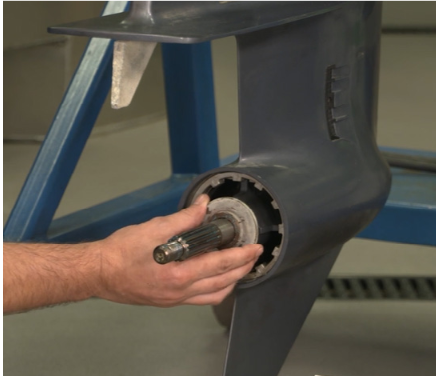
Next, apply Marine Grease (P/N: ACC-GREAS-10-CT) to the prop shaft and reinstall the propeller.
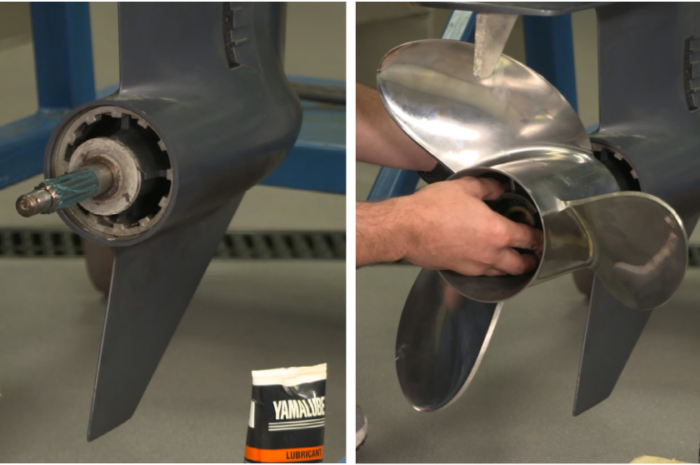
Then, install the spline washer, small washer, and propeller nut.
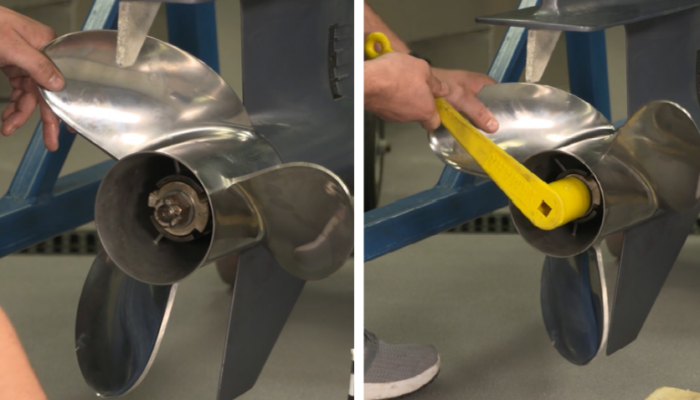
Place a wood block between the ventilation plate and the propeller to prevent the propeller from turning and torque to specification.
NOTE: When installing a propeller, be sure to consult the appropriate service manual for specifications.
Finally, install a new cotter pin. Making sure the cotter pin is installed correctly is essential, as its sole purpose is to prevent the prop nut from loosening. Remember, follow factory recommendations and use a new cotter pin and bend the ends over securely.