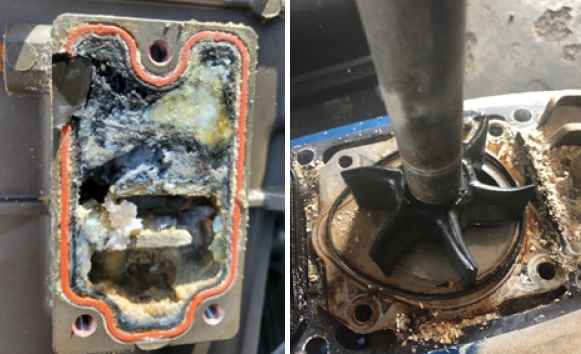
Your Yamaha outboard is raw-water cooled, meaning it uses the water it’s operating on as cooling water. All water, fresh or salt, contains contaminants that will eventually build up in the cooling passages over time.
Saltwater is naturally corrosive and any remaining inside after use is left there to do its worst. Saltwater can also crystallize when exposed to heat above 170 degrees, which causes deposits to form, potentially restricting cooling water passages. It’s a must that you flush your engine thoroughly with fresh, clean water after every use.
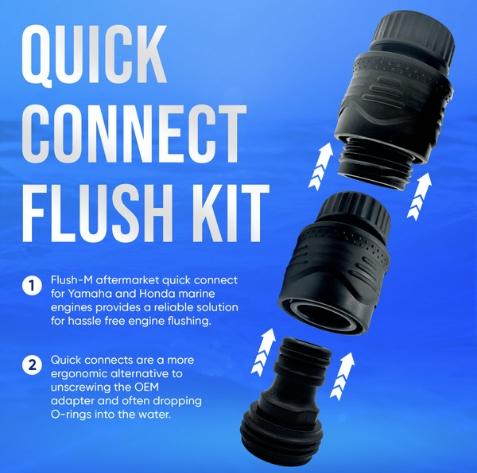
If you want to make flushing easier, get one of these quick flush attachment kits for your Yamaha. Fits any model with a flush hose attachment. The Flush kit makes connecting your garden hose easy and simple. No cross threading the plastic fitting on the engine, just snap them together and turn the hose on. Yamaha Quick Flush Kit
And the installation video CLICK HERE FOR INSTALLATION VIDEO
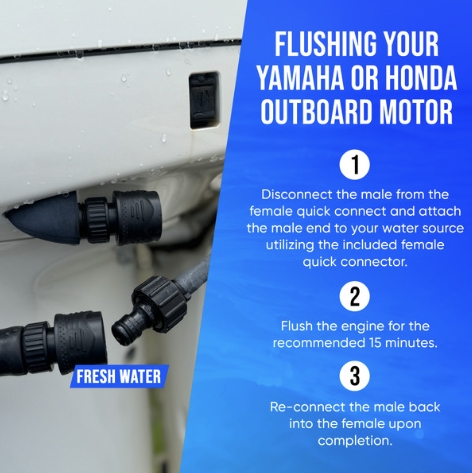
Flushing the Motor with the Built-In Flushing Attachment
NOTICE! Do not perform this procedure while the engine is running. The water pump may be damaged
and severe damage from overheating can result.
1. If the boat is remaining in the water during flushing, tilt the outboard motor up until it is completely out of
the water. This will allow the fresh water to flush out the water and exhaust passages in the midsection
and lower unit that would otherwise remain below the water level.*
2. Disconnect the freshwater flush adapter hose from the fitting on the bottom cowl.
3. Connect the freshwater flush adapter hose to the garden hose.
4. With the engine off, turn on the water supply and let the water flush through the cooling passages for about
10 to 15 minutes.
5. Turn off the water supply and disconnect the freshwater flush adapter hose from the garden hose. Reattach
the freshwater flush adapter hose to the fitting on the bottom cowl and tighten it securely.
NOTICE! If the freshwater flush adapter hose is not properly reconnected to the fitting on the lower
cowling after flushing, cooling water can leak out of the flushing hose and the engine can overheat,
causing severe damage.
It is best to perform this maintenance procedure after each use. Built-up debris and deposits will stay in the
motor if it’s not properly flushed out and can damage the unit as seen in the pictures below.