Did you know that a bent or broken connecting rod is usually caused by the engine hydrolocking?
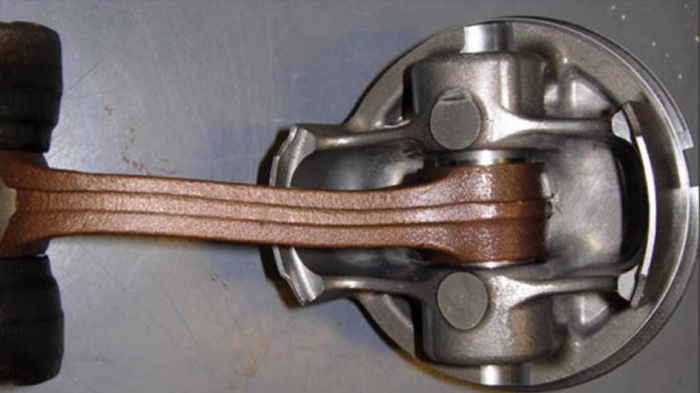
Hydrolocking is caused by too much fluid, water, or fuel entering the cylinder. Because fluid can’t compress like an air/fuel mixture, the piston cannot reach the top of the combustion
chamber on the compression cycle. Either the engine stops rotating, or the connecting rod suffers damage. This can happen if an engine is submerged or takes on water. However, a leaky carburetor or fuel injector may fill the cylinder with fuel and hydrolock the engine as well. Although the connecting rod will bend at the time the engine hydrolocks, catastrophic engine failure may happen later if the engine continues to operate with a bent connecting rod.
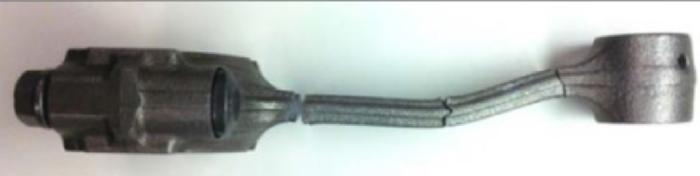
Below is another example of a hydrolocked engine.
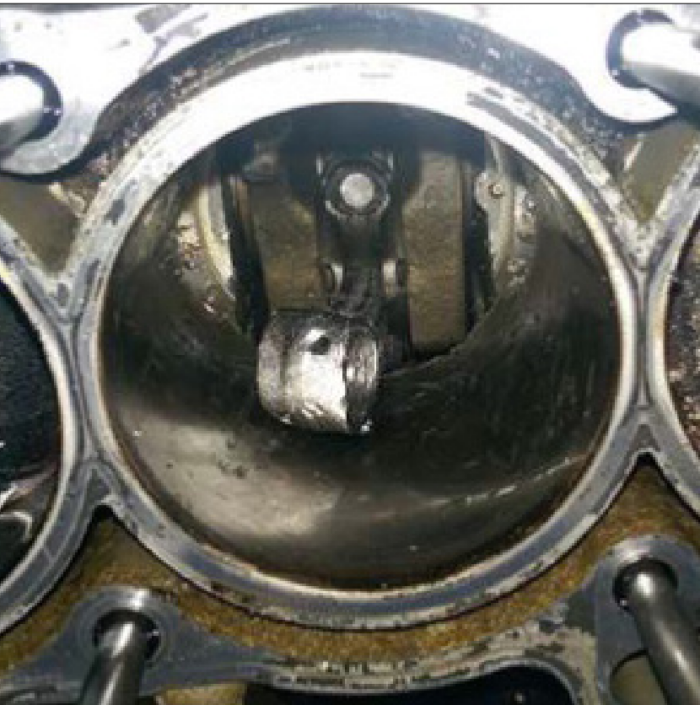
As you can see, the connecting rod is bent, and the piston is disintegrated. Remember, you can inspect the oil, fuel, air filter, and the inside of the intake manifold for signs of water to determine if hydrolocking was the cause of a piston failure.